
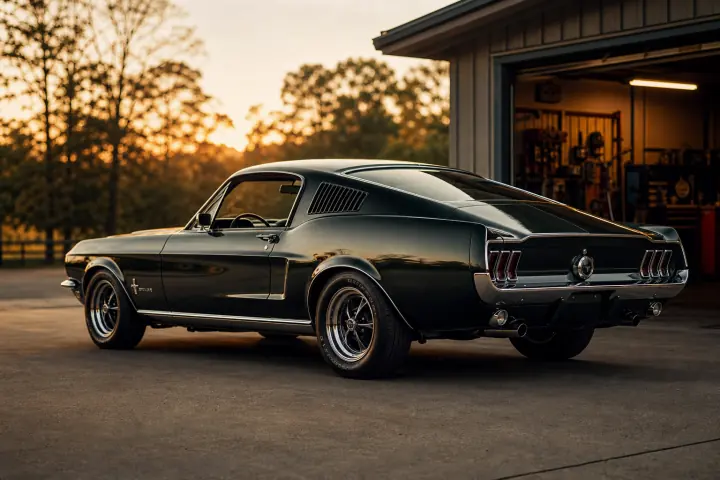
If the fastback roofline is the one you want, make that preference part of your budget. Then inspect the particular car. An attractive shape does not establish the quality of the metalwork or the accuracy of an originality claim.
Look closely at the 1967 Mustang fastback you are buying
- Roof and rear glass. Have the roof seams, drip rails, rear-window channel, and adjacent panels examined for corrosion and previous repairs.
- Quarters and trunk. Ask for wide and close photographs of repairs, trunk floor, drop-offs, wheelhouses, and panel joints.
- Underlying structure. Include rails, shock towers, floors, rockers, and torque boxes in an independent inspection.
- Identity and history. Compare the car, readable identification, ownership documents, and any records supporting special equipment claims.
Keep the inspection useful
For each concern, record a photograph, what the inspector found, and the next information needed. Ask for written quotes on significant work. You can then compare the car with other candidates on the same basis.
If a seller asks more for a fastback, compare recent completed sales with similar condition and documentation. An unknown repair remains an open cost until someone has assessed it.
For the body-code comparison and the other two shapes, see 1967 Mustang body styles.
Sources and review notes
Sources and coverage
Page updated: September 7, 2026
Inspection questions for a 1967 Mustang fastback.
- The guide identifies areas to discuss with an independent inspector. It does not establish the condition of a car from its body style or photographs.
- The linked body-style reference explains the identification fields and cites the Ford code chart.
References and related guides
Found an error? Send the page link and a source for the correction.